5 Signs Your Car Battery Is Dying in LaFollette, TN
Almost nobody plans for a dead battery. It happens in the LaFollette Medical Center parking lot when you are late for an appointment, or in your own driveway off TN-63 on a frosty January morning. The frustrating part is that a battery almost always warns you before it quits for good — you just have to know what the warning signs look like. Catch them early and you can swap the battery on your own schedule. Miss them and you are standing next to a silent car waiting for a jump.
At LaFollette Towing we run battery jump-starts and roadside calls across Campbell County every week, so we see the same failing-battery symptoms over and over. Below are the five clearest signs your car battery is on its way out, why they happen, and exactly what to do about each one before you end up stranded on I-75.
Why Car Batteries Die Faster Around Campbell County
Batteries hate temperature extremes, and East Tennessee delivers both. Summer heat here regularly pushes past 90 degrees, which speeds up the chemical breakdown inside the battery and evaporates the fluid in the cells. Then winter arrives, and a cold snap along Norris Lake can drop overnight lows into the teens. Cold thickens your engine oil so the starter has to work harder, right when a weakened battery has the least power to give. That summer-then-winter one-two punch is why a lot of LaFollette drivers lose a battery in the first cold week of the year even though it felt fine in October.
Short trips make it worse. If your daily drive is just a few minutes across town — from home to the Campbell County Courthouse and back — your alternator never gets enough run time to fully recharge the battery. Over months, the battery sits at a chronic partial charge and ages early. Knowing that, here are the symptoms to watch for.
Sign 1: A Slow Engine Crank or a Clicking Start
This is the classic warning. You turn the key or push the button, and instead of the quick, confident crank you are used to, the engine turns over slowly — a labored rurr…rurr…rurr — before it finally catches. Some mornings it may not catch at all, and you hear only a rapid clicking sound. That clicking is the starter solenoid trying to engage with not enough current behind it.
A slow crank almost always means the battery is losing its ability to hold a charge. It might still start the car on a warm afternoon and fail completely on a cold morning. Do not ignore a slow crank hoping it fixes itself — it is the single most reliable predictor that you are about to be stranded. If you have a battery this weak, our first stop on a roadside call is usually a jump-start to get you moving, followed by advice on replacement.
Sign 2: Dim Headlights and Flickering Dashboard Lights
Your battery does not just start the car — it stabilizes the electrical system for everything else. When it weakens, the first place many drivers notice is the lights. Headlights that look noticeably dimmer at idle and brighten when you rev the engine are a strong tell: the battery cannot hold voltage on its own, so brightness rises and falls with engine speed.
Inside the cabin, watch for dashboard lights that flicker, a dome light that fades, or power windows that crawl up slower than they used to. Electronics acting glitchy — the radio resetting, the clock losing time, the touchscreen rebooting — can all trace back to a battery that can no longer deliver steady voltage. On the darker stretches of US-25W and TN-116, weak headlights are also a genuine safety problem, not just an inconvenience.
Sign 3: The Battery or Charging Warning Light Is On
That little battery-shaped icon on your dash is not only about the battery itself — it monitors the whole charging system, including the alternator that keeps the battery topped up while you drive. When it glows, it means the system is not charging the way it should. Sometimes the battery is the problem; sometimes it is a failing alternator or a loose connection that will kill the battery next.
Either way, treat this light as a countdown. Once the alternator stops charging, your car is running purely on stored battery power, and you may only have a handful of miles before everything shuts down. If that warning light comes on while you are driving toward Jacksboro or Jellico, head somewhere safe and get the system tested rather than pushing your luck on TN-63.
Sign 4: A Swollen Case, Corroded Terminals, or a Rotten-Egg Smell
Some of the clearest signs are physical, and you can spot them by opening the hood. A healthy battery case is squared-off and flat. If the sides look bloated or swollen, heat has damaged the battery internally and it needs to be replaced — a swollen battery can leak or fail with no further warning.
Look at the terminals too. A crusty white, blue, or greenish powder around the posts is corrosion, and it blocks the flow of power between the battery and your car. Light corrosion can be cleaned, but if it keeps coming back, the battery is likely venting gas as it fails. That rotten-egg, sulfur smell near the battery is another red flag — it means the battery is overheating and releasing hydrogen sulfide. The U.S. government safety agency, the NHTSA, tracks battery and electrical failures among the everyday issues that leave drivers stranded, so if you see or smell any of these, stop driving on that battery.
Sign 5: The Battery Is Over Three Years Old or Needs Frequent Jumps
Age alone is a warning sign. Most car batteries last three to five years, and in our Campbell County climate the shorter end of that range is common. If you do not know how old your battery is, check the manufacture date sticker on top of the case. Anything past three years deserves a load test, which any parts store or shop can do in a few minutes.
The other dead giveaway is needing more than one jump in a short span. A single jump after leaving your lights on overnight is normal. But if you have needed two or three jumps in a month, the battery is no longer holding a charge and no amount of jump-starting will fix it — each jump is just borrowing time. At that point replacement is the only real answer, and it is far cheaper than repeated tows and missed workdays.
What to Do If Your Battery Dies in LaFollette
If you are already stranded, stay calm and get somewhere safe. Pull as far off the road as you can — well onto the shoulder if you are on I-75 between Exits 134 and 141 — and turn on your hazard lights. Do not stand between your car and traffic. From there you have two good options:
- A jump-start will get you rolling if the battery still has some life. Our roadside techs carry professional jump packs and can also do a quick voltage check to tell you whether the battery will make it home or leave you stuck again.
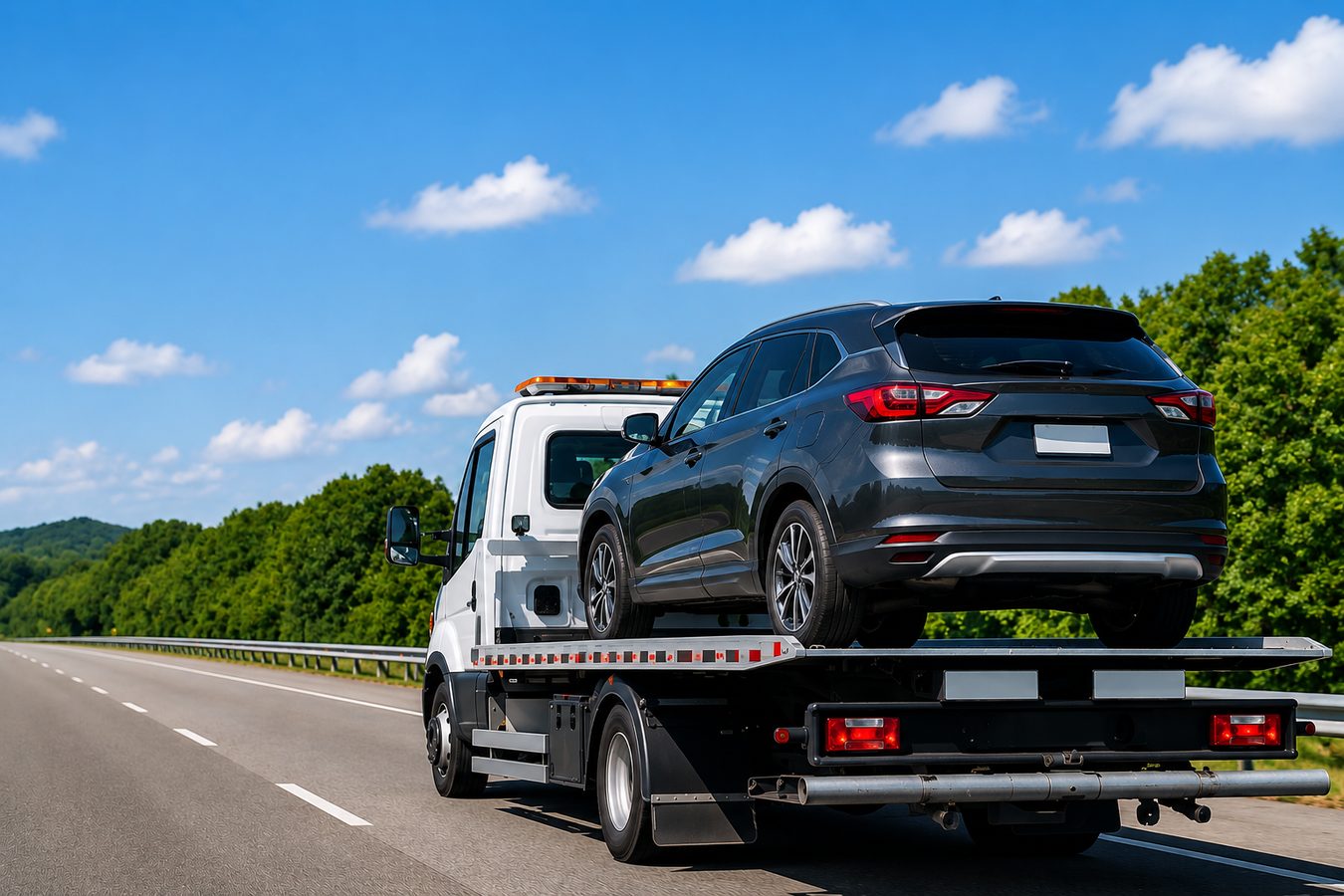
- A tow is the right call when the battery is completely dead, the alternator has failed, or the car will not stay running after a jump. Our flatbed and wheel-lift trucks are DOT compliant and our drivers are licensed and insured, so your car gets to the shop safely.
LaFollette Towing runs 24/7, and we cover LaFollette, Jacksboro, Caryville, Jellico, Rocky Top, New Tazewell and the rest of Campbell County (ZIP 37766 and beyond). Whether you need a two-minute jump in a parking lot or a full tow to your mechanic, one call gets a truck headed your way — usually in 30 to 45 minutes.
Dead Battery? We Come to You — 24/7
Fast jump-starts and battery towing across LaFollette and Campbell County. Licensed, insured, and usually there in 30–45 minutes.
Call (931) 465-5482Frequently Asked Questions
How long does a car battery last in LaFollette, TN?
Most car batteries last three to five years, but the hot summers and cold winter mornings in Campbell County shorten that. If your battery is past the three-year mark and you have noticed slow cranks or dim lights, have it tested before it strands you.
Can you jump-start or tow my car if the battery dies in LaFollette?
Yes. LaFollette Towing offers 24/7 jump-start and roadside battery service across LaFollette, Jacksboro, Caryville, Jellico and all of Campbell County, with a typical 30 to 45 minute response. If the battery is dead beyond a jump, our flatbed and wheel-lift trucks can tow you to a shop. Call (931) 465-5482.
When did you last have your battery tested — and is it already past the three-year mark?