How to Jump Start a Dead Car Battery in LaFollette, TN
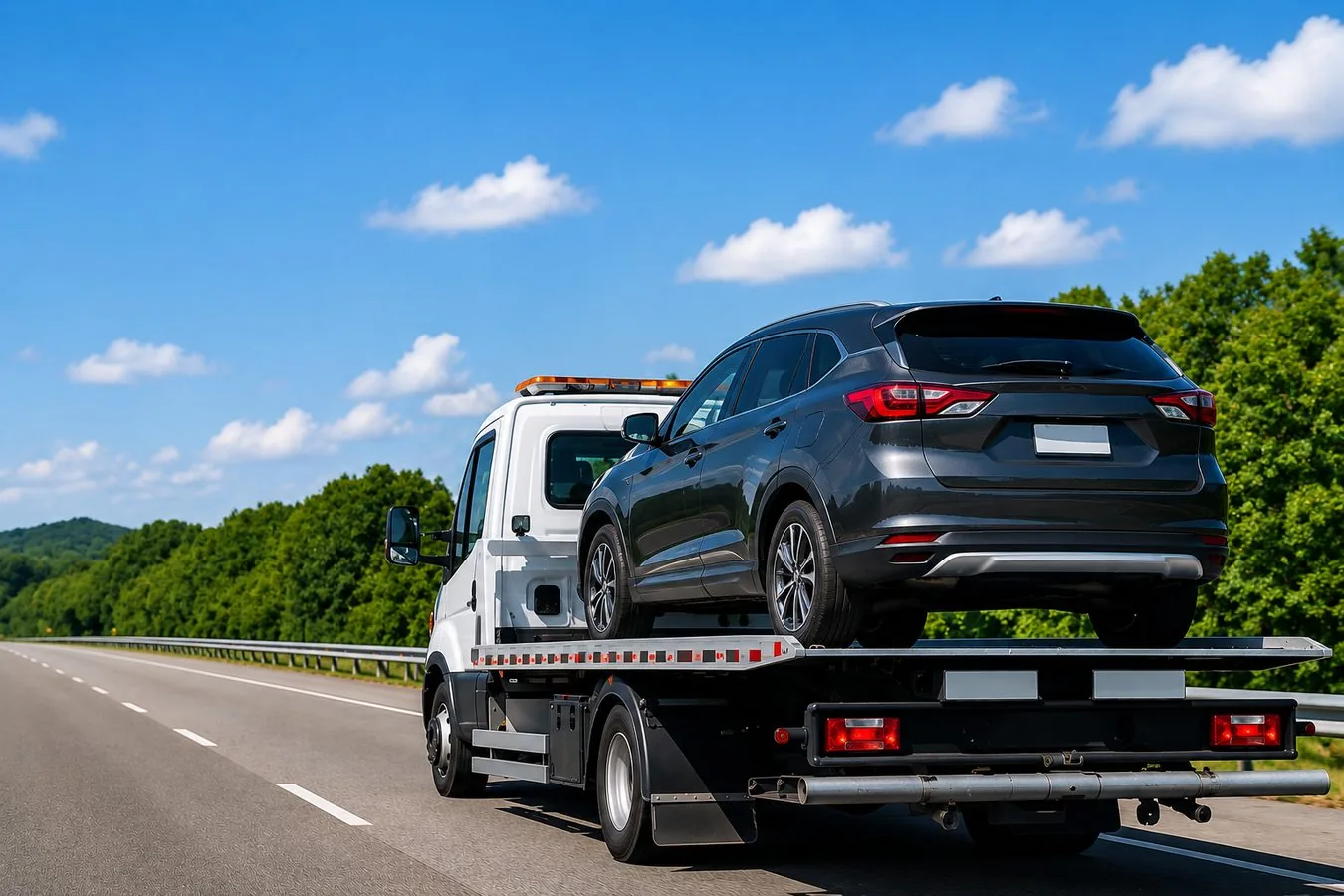
It is a scenario every driver in Campbell County knows too well: you turn the key, the dash lights flicker, and the engine just clicks or does nothing at all. A dead battery is one of the most common reasons cars refuse to start, and a cold morning in the hills around LaFollette or a light left on overnight is often all it takes. The good news is that most dead batteries can be revived in a few minutes with a set of jumper cables and a second vehicle — as long as you do it in the right order and with a little care.
This guide walks you through exactly how to jump start a car safely, step by step, using plain language and the same order our drivers follow on roadside calls across LaFollette, Jacksboro, Caryville and the rest of the 37766 area. We will also cover what to do if the jump does not work and when it is smarter to skip the cables and call for a professional jump start or tow. LaFollette Towing runs 24/7, licensed and insured, with typical response times of 30 to 45 minutes anywhere in Campbell County.
What You Need Before You Jump Start a Car
Before you touch a single cable, gather your gear and pick a safe spot. Jump starting is straightforward, but it involves a live battery and a running engine, so a few minutes of preparation protects you and your vehicle.
- A set of jumper cables. Look for cables that are at least 10 to 12 feet long and heavy gauge (4 to 6 gauge is ideal). Thin, cheap cables often cannot carry enough current to start a larger truck or SUV.
- A working donor vehicle. You need a second car with a healthy, fully charged battery of roughly the same voltage — nearly every passenger vehicle in LaFollette uses a 12-volt system.
- Gloves and eye protection if you have them. Battery terminals can be corroded and, in rare cases, a failing battery can vent gas.
- A safe location. Pull as far off the road as possible. On busier stretches like US-25W or near the I-75 exits (134 through 141), get both vehicles well onto the shoulder and turn on your hazard lights.
If you are stranded in a live traffic lane, in bad weather, or after dark on a rural road like TN-63 or TN-116, do not try to work between vehicles. Stay buckled inside with your hazards on and call for roadside assistance instead. No jump start is worth standing in traffic.
How to Jump Start a Car Step by Step
Once both cars are parked safely and turned off, follow this exact sequence. The order matters — connecting the cables in the wrong order is the single most common mistake we see, and it can spark or damage sensitive electronics.
- Park the vehicles close but not touching. Position the donor car nose-to-nose or side-by-side with the dead car, close enough for the cables to reach both batteries. Put both in Park (or neutral for a manual), set the parking brakes, and turn off both ignitions.
- Connect the first red (positive) clamp. Attach one red clamp to the positive (+) terminal of the dead battery.
- Connect the second red clamp. Attach the other red clamp to the positive (+) terminal of the good battery.
- Connect the first black (negative) clamp. Attach one black clamp to the negative (-) terminal of the good battery.
- Connect the final black clamp to bare metal. Attach the last black clamp to an unpainted metal surface on the dead car — a clean bolt or bracket on the engine block, away from the battery. This grounds the connection and keeps any spark away from battery gases.
- Start the donor car. Let it run for two to three minutes. This begins feeding charge into the dead battery.
- Start the dead car. Try to start the vehicle with the dead battery. If it cranks slowly, give it another minute or two and try again.
- Remove the cables in reverse order. Once the car is running, disconnect in the opposite order you connected: black clamp from the previously dead car, black from the good battery, red from the good battery, then red from the revived battery. Keep the clamps from touching each other or any metal while the other end is still attached.
For a printable version of these steps, AAA publishes a clear official jump-start walkthrough that matches the sequence above. Keep a copy in your glovebox alongside your cables.
What to Do If the Jump Start Does Not Work
Sometimes the cables go on perfectly and the engine still will not turn over. A few things could be going on, and each points you toward the right next move.
If you hear only a rapid clicking noise, the battery may be too far gone to hold even a boosted charge, or the connection at the terminals is poor. Wiggle the clamps, scrape away any white or blue corrosion, and make sure you have solid metal-to-metal contact. If you get nothing at all — no lights, no click — the problem may be a blown fusible link, a bad starter, or a battery that has failed completely rather than simply drained.
Give the donor car five full minutes of run time before your next attempt; a deeply discharged battery needs time to accept charge. If after two or three honest tries the car still will not start, stop. Repeated cranking can overheat the starter and drain the donor battery too. At that point a jump is not the answer, and forcing it only risks a second stranded vehicle.
This is where a call to a local roadside team saves the afternoon. Our drivers carry professional jump packs strong enough to turn over heavy-duty trucks, and if the battery truly is dead, we can perform a quick flatbed or wheel-lift tow to your mechanic or home in LaFollette without any further damage to your vehicle.
Why Car Batteries Die Around Campbell County
Understanding why your battery quit helps you avoid a repeat. In the LaFollette area, a handful of causes come up again and again.
Temperature is a big one. The cold snaps that roll through the Cumberland Mountains each winter reduce a battery’s cranking power, while the summer heat around Norris Lake quietly speeds up internal wear. Most batteries last three to five years, and one that is already weak will often fail on the first truly cold morning. Human error is the other frequent culprit — a dome light, a trunk light, or headlights left on overnight will flatten even a healthy battery by sunrise. Short trips also matter: if you only ever drive a few minutes between stops around town, the alternator may never fully recharge the battery, so it slowly loses capacity over months.
If your car has needed more than one jump recently, treat that as a warning. Have the battery and charging system tested rather than relying on repeated boosts. A failing alternator, not the battery, is sometimes the real problem, and no amount of jump starting will fix that.
When to Call a Tow Instead of Jumping
A jump start is the right fix for a simple drained battery. But there are clear situations where calling a licensed, insured, DOT compliant towing company is the safer and smarter choice:
- You have tried two or three jumps and the car still will not start.
- You see a cracked, swollen, or leaking battery, or smell a strong rotten-egg (sulfur) odor.
- You are stranded in a traffic lane, on a blind curve, or on a narrow mountain road with no safe shoulder.
- You do not have cables, a donor car is not available, or you simply are not comfortable working under the hood.
- The car starts but dies again within minutes, which points to an alternator or wiring fault a jump cannot solve.
In any of these cases, LaFollette Towing can roll a truck to you within about 30 to 45 minutes. Whether you need a fast jump on the spot or a careful flatbed tow to your shop, we serve LaFollette, Jacksboro, Caryville, Jellico, Rocky Top, New Tazewell and the surrounding Campbell County roads around the clock. For related help, the U.S. government’s safety resources at NHTSA.gov also cover what to keep in a roadside emergency kit.
Dead Battery in LaFollette? We Come to You.
Fast 24/7 jump starts and roadside assistance across Campbell County. Licensed, insured, and usually there in 30 to 45 minutes.
Call (865) 509-9219Frequently Asked Questions
How long should I let a car run after a jump start?
Drive or idle for at least 20 to 30 minutes after a successful jump start so the alternator can recharge the battery. Short trips around LaFollette may not put enough charge back in, so take a longer drive on US-25W or I-75 if you can, or have the battery tested.
Is it safe to jump start my own car?
Yes, if you connect the cables in the correct order and keep them away from moving engine parts. Never let the red and black clamps touch each other while connected to a battery. If you smell rotten eggs, see a cracked or leaking battery, or are stranded on a busy road, skip the jump and call a licensed, insured roadside team like LaFollette Towing at (865) 509-9219.
Has a dead battery ever left you stranded on an I-75 exit or a back road near Norris Lake? Keeping a good set of cables in the trunk is one of the cheapest ways to save yourself a very long morning.