Mountain Road Towing in Campbell County & LaFollette, TN
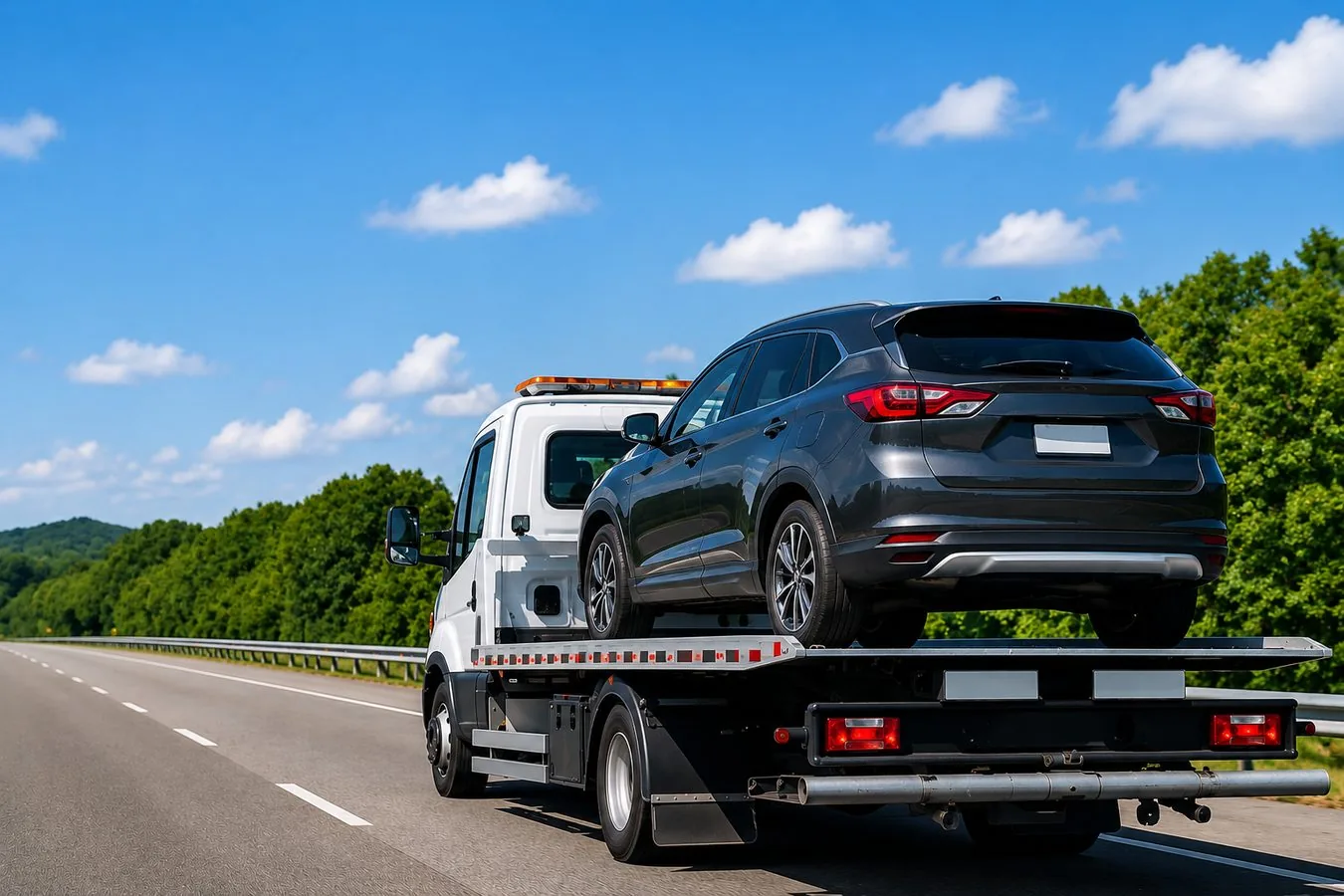
Campbell County is beautiful country to drive through, but the same ridges and switchbacks that make it scenic also make it hard on vehicles and unforgiving when something goes wrong. A blown tire on a steep grade, an overheated engine climbing a mountain pass, or a car that slides off a wet gravel shoulder near Norris Lake is a very different recovery job than a flat tire in a flat parking lot. If you break down on a mountain road anywhere in Campbell County, the truck that shows up and how the operator handles the terrain matter enormously.
This guide walks through what makes mountain-road towing different, which Campbell County roads generate the most calls, and how a 24/7 towing company like ours approaches recovery on grades, narrow shoulders, and rural routes around LaFollette, Jacksboro, Caryville, Jellico, and Rocky Top. If you are stuck right now, skip ahead and call us at (865) 509-9219. Otherwise, here is what you need to know before you ever need a tow up here.
Why Mountain Roads in Campbell County Demand Special Towing
On flat ground, hooking up a disabled car is fairly routine. On a mountain road, gravity, sightlines, and shoulder conditions all work against you. A steep grade changes how a vehicle sits on a flatbed and how the winch cable loads. A blind curve means the tow operator has to protect the scene from traffic that appears with almost no warning. And the shoulders along many Campbell County roads are soft, narrow, or drop off sharply into a ditch or ravine, so there is little room to stage a truck safely.
Those conditions are exactly why the right equipment matters. A flatbed tow truck keeps a disabled vehicle level and fully off the road, which is safer on a grade than dragging it on a wheel-lift. When a car has slid off the pavement, a winch-out with proper rigging pulls it back without tearing up the undercarriage. A licensed and insured, DOT compliant operator knows how to angle the truck, set the cable, and keep everyone out of the traffic lane while the work happens. This is not a job for a friend with a chain and a pickup, and on a mountain road the difference shows up fast.
The Campbell County Roads Where Drivers Get Stuck
Some routes generate far more breakdown and recovery calls than others, and knowing the trouble spots helps you describe your location clearly when you call. A few that come up again and again:
- I-75 (Exits 134 to 141): The interstate climbs and descends through the county, and the long grades near Caryville and Jellico are hard on brakes and transmissions. Give us the exit number and direction of travel.
- US-25W: This older highway winds through LaFollette and Jacksboro with tight shoulders and plenty of cross traffic near town. Overheating and fender benders are common here.
- TN-63: Running east from the I-75 corridor, TN-63 has long rural stretches with limited cell coverage and few landmarks. Note the nearest mile marker or a business you just passed.
- TN-116: The route toward Rocky Top and the ridges is genuinely steep and curvy. It is beautiful and it is also where a lot of soft-shoulder slide-offs happen after rain.
When you call, the single most useful thing you can tell us is a mile marker, a landmark, or a cross street. A precise location on a mountain road can shave ten or fifteen minutes off our arrival because the driver picks the correct route and truck the first time.
Flatbed vs. Wheel-Lift: What Mountain Recovery Actually Needs
People often ask why we send a flatbed for one call and a wheel-lift for another. On mountain terrain the choice is about safety and protecting your vehicle. A flatbed loads the entire car onto a level deck, which keeps it stable on a grade and prevents drivetrain wear on all-wheel-drive and low-clearance vehicles. That is usually our first choice for a full breakdown on TN-116 or a steep section of I-75.
A wheel-lift truck is nimbler and can be the better tool in a tight spot, like a narrow shoulder near town where a full flatbed cannot stage safely. It lifts the drive wheels and tows the vehicle a short distance. The point is that a good towing operation matches the truck to the road, not the other way around. When you describe your situation on the phone, we are already deciding which unit gives you the safest, fastest recovery.
Winch-Outs on Steep Grades and Soft Shoulders
A large share of mountain-road calls are not classic breakdowns at all. They are vehicles that left the pavement: a tire that dropped off a soft shoulder after rain, a car that slid on gravel through a curve, or a truck that nosed into a ditch avoiding a deer. These need a winch-out, and doing it right takes technique.
The temptation is to gun the engine and try to drive out. On a soft shoulder or mud, that almost always digs you in deeper and can damage tires, axles, or the transmission. A proper winch-out uses the tow truck as an anchor, sets the cable and straps at the correct points on the frame, and pulls the vehicle back on a controlled line so it does not swing into traffic or slide further downhill. When the shoulder drops off steeply, the operator also has to think about where the vehicle will go once it is free. This is the kind of judgment that separates a licensed and insured recovery outfit from a risky improvised pull.
What to Do While You Wait for a Tow Truck
Once help is on the way, a few simple steps keep you safe on a mountain road. First, make yourself visible: hazard lights on, and if you have reflective triangles or flares and can place them safely uphill of your vehicle, do it so approaching drivers get warning around a curve. Second, think carefully about whether to stay in the car. On a blind curve or a fast stretch of I-75, standing outside the vehicle is often the most dangerous thing you can do, and staying buckled inside is safer. On a quiet shoulder with good sightlines and a guardrail, stepping well away from traffic may be better.
The federal safety agencies are clear that being struck by traffic is one of the biggest risks in a roadside breakdown. The National Highway Traffic Safety Administration recommends getting your vehicle as far off the road as possible, staying aware of passing traffic, and calling for professional help rather than attempting risky repairs in a live lane. On a Campbell County mountain road, that advice matters even more because drivers come around curves with little time to react.
Staying Safe on Norris Lake and Rural Mountain Routes
Weekends around Norris Lake bring a lot of traffic that is not used to these roads: boat trailers, out-of-town visitors, and vehicles loaded heavier than usual. Trailer sway on a grade, overheated brakes on a long descent, and flat tires on rough rural pavement are all common. If you are hauling a boat or camper and something goes wrong, tell us the vehicle and trailer setup when you call so we bring the right equipment, including heavy-duty towing capacity when the load calls for it.
For everyday drivers around LaFollette and the ZIP 37766 area, the best protection is basic readiness: keep your tires and brakes in good shape before a mountain trip, watch your temperature gauge on long climbs, and save a real 24/7 towing number in your phone before you need it. When a breakdown does happen up here, you want a local operator who already knows the roads, the landmarks like the Campbell County Courthouse and LaFollette Medical Center, and how to get to you quickly.
Stranded on a Mountain Road in Campbell County?
Flatbed towing, winch-outs, and roadside help across LaFollette, Jacksboro, Caryville, Jellico, Rocky Top and Norris Lake — 24/7, licensed and insured.
Call (865) 509-9219 NowFrequently Asked Questions
Can a tow truck reach me on a narrow mountain road in Campbell County?
Yes. We run flatbed and wheel-lift trucks sized for the tight switchbacks and steep grades on roads like TN-116 and TN-63. When we dispatch, tell us the nearest mile marker, landmark or cross street so the driver picks the right truck and approach. Typical response time across Campbell County is 30 to 45 minutes, 24/7.
What should I do if my car slides off a mountain road onto a soft shoulder?
Stay in the vehicle if traffic is moving, keep your seatbelt on, and turn on your hazard lights. Do not try to drive out of soft mud or gravel, which usually digs you in deeper. Call a licensed and insured towing company with winch-out capability. A DOT compliant operator can safely pull the vehicle back onto the roadway without further damage.
What is the trickiest stretch of mountain road you drive in Campbell County — and do you keep a tow number saved before you need it?