Car Overheating in LaFollette, TN? Do This Right Away
You are climbing a grade on US-25W or crawling through summer traffic near the Campbell County Courthouse when the temperature needle swings toward red, or a thin curl of steam slips out from under the hood. It is one of the most common ways a normal drive turns into a roadside emergency around LaFollette, and how you react in the next sixty seconds decides whether you are looking at a cheap fix or a blown engine. This guide walks you through exactly what to do when your car is overheating, what you should never do, and when it is time to stop and call a tow.
LaFollette Towing runs flatbed and wheel-lift trucks across LaFollette, Jacksboro, Caryville, Jellico, Rocky Top, and the rest of Campbell County (ZIP 37766) around the clock. We see overheated cars almost every hot week of the year, and the drivers who come out cheapest are the ones who pulled over early. Here is how to be one of them.
First: Recognize the Warning Signs of an Overheating Engine
Your car usually gives you a warning before it strands you. The most obvious is the temperature gauge on your dash sliding out of its normal middle range toward the red H. Many newer vehicles skip the gauge and flash a red or amber engine-temperature light instead. Trust it either way. Other early signals include:
- A sweet, syrupy smell (that is coolant) or a hot, burning-oil odor drifting into the cabin.
- Steam or vapor rising from the hood, sometimes mistaken for smoke.
- The heater suddenly blowing cold, or the engine feeling down on power and pinging.
- A coolant puddle under the car after you park, usually bright green, orange, or pink.
Overheating spikes in the summer heat, on long climbs like the pulls toward Jellico and up TN-63, and in slow stop-and-go traffic where there is no airflow across the radiator. If you tow a trailer or haul near Norris Lake on a hot afternoon, your cooling system is working even harder.
What to Do the Moment Your Car Starts Overheating
The instant you see the gauge climbing, act. Every extra minute a hot engine runs is more risk of permanent damage. Work through these steps in order:
- Turn off the air conditioning. The A/C compressor adds a heavy load and heat to the engine. Shutting it off is the fastest way to take some strain off the system.
- Turn the heater on full blast. It feels miserable on a July day, but the heater core pulls real heat out of the engine and dumps it into the cabin. Crank the fan and roll the windows down. This alone can buy you a few crucial minutes.
- Ease off the throttle and find a safe spot. Coast, avoid hard acceleration, and look for a flat pull-off, a parking lot, or a wide shoulder away from I-75 traffic. Steady low-speed cruising with airflow is easier on the engine than idling.
- Pull over and shut the engine off. Once you are safely out of the travel lane, turn the engine off to stop it from making more heat. Switch on your hazard lights so other drivers see you.
Then wait. A hot engine needs time before it is safe to even look at. Give it a solid 20 to 30 minutes with the hood closed before you go anywhere near the radiator cap.
What You Should Never Do to an Overheating Car
A few well-meant moves make things dramatically worse. Avoid all of these:
- Never open the radiator cap or coolant reservoir on a hot engine. The cooling system is pressurized, and superheated coolant can erupt and cause severe burns. Wait until the engine is completely cool, and even then open it slowly with a rag.
- Never pour cold water into a hot engine or onto the block. The sudden temperature shock can crack the engine block or cylinder head. If you must add coolant, wait for the engine to cool and add it slowly.
- Never keep driving a car that is fully overheated just to reach home. This is the single most expensive mistake. According to AAA's vehicle maintenance guidance, continuing to run an overheated engine can quickly turn a minor cooling issue into catastrophic, non-repairable damage.
- Never ignore a temperature light because the car still runs. An engine can keep running right up until the moment it seizes.
After It Cools Down: Can You Drive or Do You Need a Tow?
Once the engine is fully cool, you can carefully check the coolant reservoir. If it is low and you happen to have coolant or water on hand, topping it off and restarting may get a minor case moving again. Watch the gauge like a hawk. If it climbs right back toward red, stop immediately.
You need a tow, not a second attempt at driving, if any of these are true:
- The temperature gauge returns to the red zone within a mile or two of restarting.
- You see a steady coolant leak or a large puddle forming under the car.
- There is white smoke from the exhaust, which can point to a blown head gasket.
- The engine is knocking, running rough, or will not restart at all.
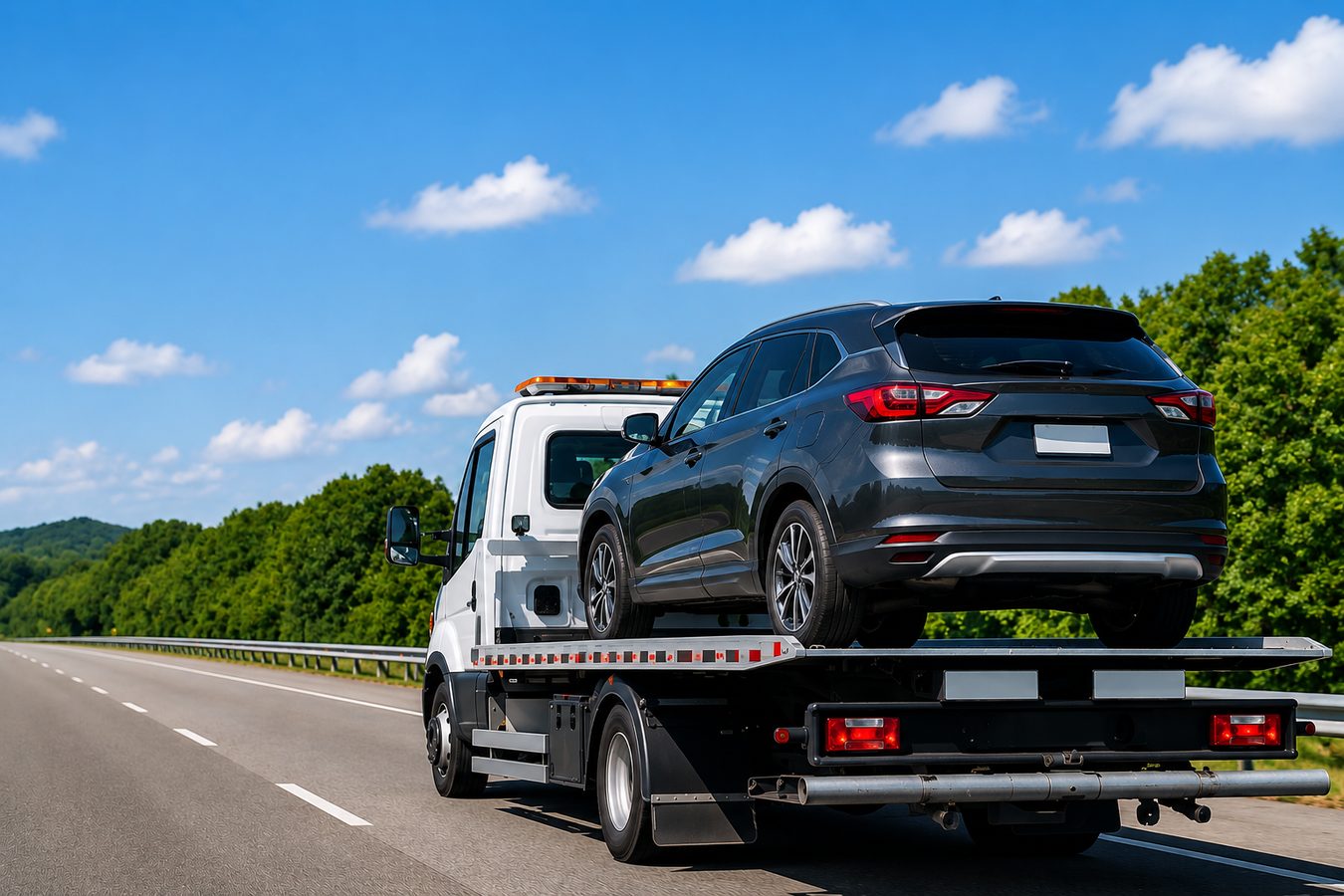
In those cases, the smart move is a flatbed tow to your mechanic. A flatbed keeps all four wheels off the ground and never asks the sick engine to run, which protects it from further harm. Our drivers are licensed and insured, DOT compliant, and equipped for flatbed, wheel-lift, and winch-out recovery across LaFollette and Campbell County.
How to Keep Your Car From Overheating in the First Place
Most overheating traces back to a cooling system that was quietly neglected. A little upkeep goes a long way in the Tennessee heat:
- Check your coolant level and condition regularly, and flush the system on your manufacturer's schedule.
- Watch for slow leaks, soft or cracked radiator hoses, and a radiator cap that no longer holds pressure.
- Replace the thermostat and water pump when they are due; a stuck thermostat is a classic overheating cause.
- Before a long summer haul toward Norris Lake or a loaded climb up TN-116, glance at your temperature gauge and top off coolant if needed.
Even with good maintenance, cooling parts fail without warning. When that happens miles from home, a fast local tow is the safety net that keeps a hose failure from becoming an engine replacement.
Why Overheating Hits Harder Around LaFollette and Campbell County
Our corner of East Tennessee is tougher on cooling systems than flat, open highway. The terrain around LaFollette is full of sustained climbs, and long uphill pulls force the engine to work at high load for minutes at a time with limited airflow. That is the exact condition where a marginal radiator, a weak water pump, or an old thermostat finally gives up. Add a humid summer afternoon and a full load of passengers heading to Norris Lake, and the margin gets thin fast.
Traffic patterns matter too. Slow crawls through downtown LaFollette, backups near the I-75 exits between 134 and 141, and stop-and-go around the Campbell County Courthouse all rob the radiator of the moving air it needs to shed heat. If your car is going to overheat, it usually chooses the worst possible moment: mid-climb, mid-traffic, or far from a shop. Knowing the pattern is half the battle. Keep an eye on your gauge whenever you are climbing or crawling in the heat, and keep our number saved so a bad afternoon does not become a bad week. We answer 24/7 and reach most of Campbell County in 30 to 45 minutes with the right truck for the job, whether that is a flatbed, a wheel-lift, or a winch-out.
Stranded With an Overheated Engine? We Are 24/7.
LaFollette Towing runs flatbed and wheel-lift trucks across LaFollette, Jacksboro, Caryville, Jellico and all of Campbell County. Fast, DOT-compliant, licensed and insured — usually on scene in 30 to 45 minutes.
Call (931) 465-5482 NowFrequently Asked Questions
Can I keep driving my car a short distance if it is overheating?
Only in a true crawl-to-safety situation. If the temperature gauge is in the red or you see steam, keep driving just long enough to get off the road, then shut the engine off. Driving an overheated engine even a mile or two can warp the head or blow the head gasket, turning a tow bill into a multi-thousand-dollar repair. If you cannot reach a safe pull-off within seconds, stop where you are and call for a tow.
How much does it cost to tow an overheated car in LaFollette?
A local flatbed or wheel-lift tow within LaFollette and Campbell County typically runs a base hook-up fee plus a per-mile rate, and most in-town calls stay in the low hundreds. That is far cheaper than the engine damage caused by driving a car that is overheating. Call LaFollette Towing at (931) 465-5482 for an up-front quote before you are stranded.
Has your car ever overheated on a LaFollette back road or an I-75 climb? What did you do — and would you handle it differently now?